 Indonesian
  English
  Spanish
  French
  Portuguese
  Russian
  Arabic
  German
  Italian
  Dutch
Dutch  Japanese
  Korean
  Thai
Thai  Vietnamese
  Turkish
  Hebrew
  Panjabi
  Malay
Malay  Bengali
  Persian
  Urdu
Urdu  Hazaragi
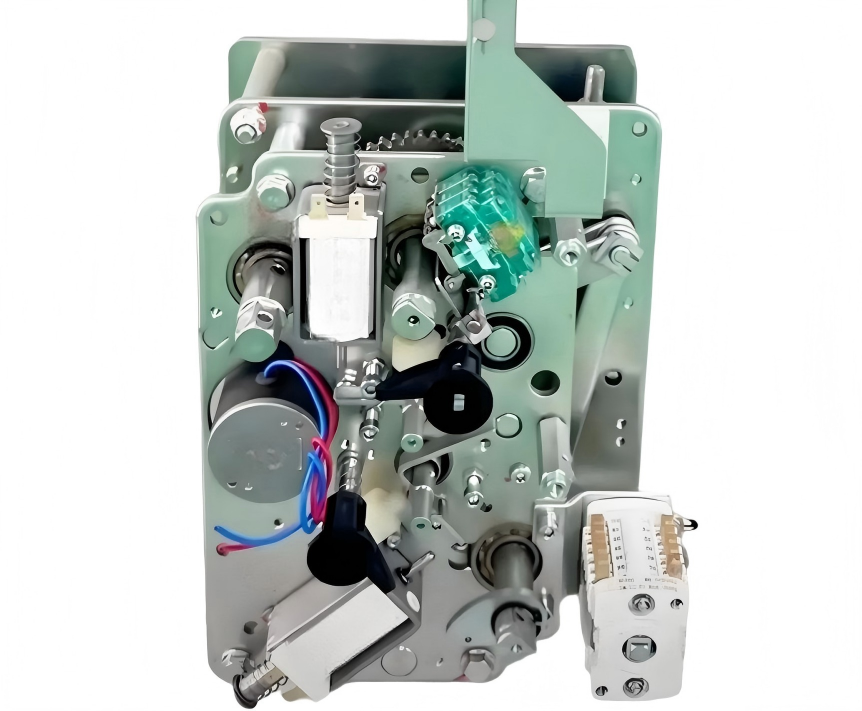
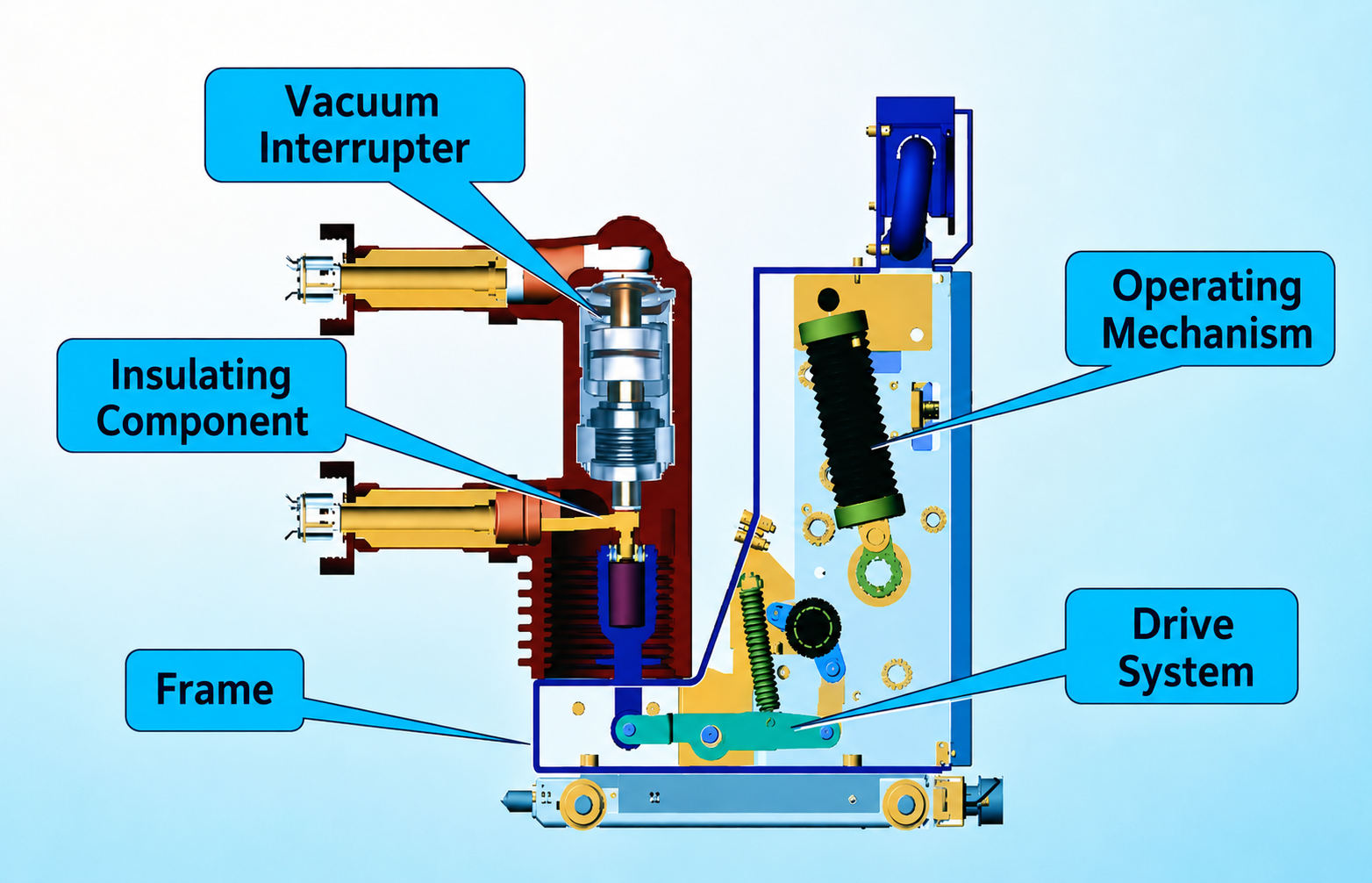
 I.Medium-voltage circuit breakers mainly consist of the circuit breaker body and the operating mechanism. With continuous technological updates to circuit breakers, the possibility of failure in the circuit breaker body is decreasing, and circuit breaker failures are concentrated in the operating mechanism. According to statistics on medium-voltage circuit breaker operation failures, among various circuit breaker failures, operating mechanism failures are the most frequent, accounting for approximately 70-80% of circuit breaker failures.
Composition of Medium Bahasa Indonesia: Voltage Csirkuit Breakers
Normally, the operating mechanism operates statically, making it impossible to monitor the status of its components and detect potential problems in a timely manner until the fault is discovered during operation. Therefore, the performance and reliability of the circuit breaker’s operating mechanism determine the performance and reliability of the circuit breaker itself, and consequently, the reliability of the power supply. Thus, having understood the circuit breaker, it is essential to explain the operating mechanism here as well.
II.The operating mechanism generally consists of the following parts:
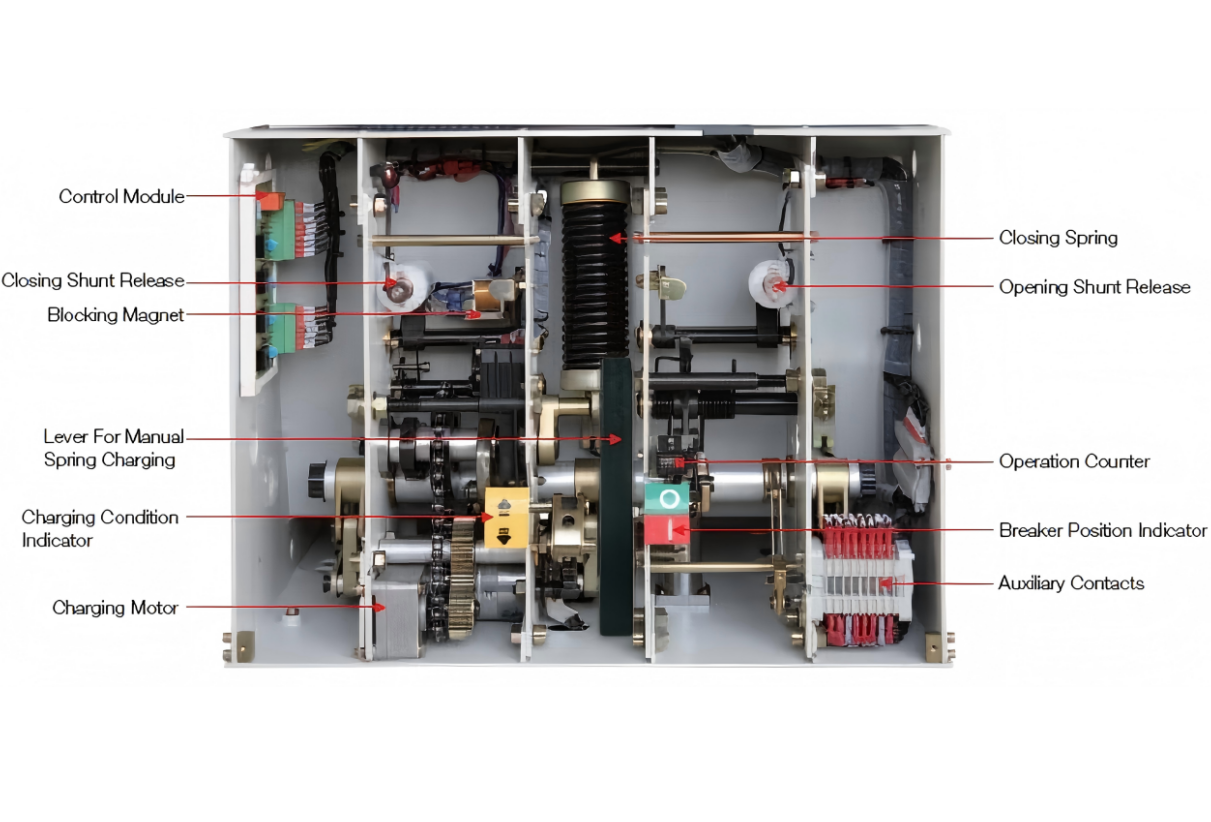
- Energy Conversion Mechanism: This mechanism converts stored energy for operation into mechanical energy, generating mechanical motion according to the purpose specified by the operating mechanism. Based on the different forms of energy used for closing, it can be divided into electromagnetic operating mechanisms, spring operating mechanisms, permanent magnet operating mechanisms, and magnetically controlled operating mechanisms.
- Linkage Mechanism: This mechanism uses the mechanical motion energy converted by the energy conversion mechanism to cause the moving contacts of the circuit breaker to perform the action specified by the operating purpose. This type of mechanism is often a transmission system composed of linkage mechanisms, crank arms, and pull rods.
- Holding Mechanism: This mechanism maintains the operation completed by the operating mechanism, ensuring that the specified operational task is not lost due to the disappearance of the instantaneous command information. This type of mechanism is often composed of flexible mechanical latches or levers.
- Release Mechanism: This mechanism receives the operation command information and reacts to the holding mechanism, i.e., releases the holding, thereby releasing the energy of the circuit breaker’s closing or tripping springs, allowing the circuit breaker to complete the closing or opening process. It is often achieved by an electromagnetic coil pushing a movable iron core or push rod, which in turn actuates the holding latch or lever to release the holding.
III. The performance and quality of the operating mechanism play a crucial role in the performance and reliability of high-voltage circuit breakers. Therefore, the operating mechanism of a circuit breaker must meet the following basic requirements:
- The closing mechanism must be able to close short-circuit currents. The closing mechanism must not only meet the requirements for closing the circuit breaker under normal conditions, but also have the ability to close short-circuit fault currents during short-circuit faults. When a short-circuit fault occurs in the power grid, the short-circuit current in the circuit can reach 40kA or even greater, and the electrodynamic force borne by the circuit breaker can reach several thousand Newtons or more. The operating mechanism must overcome such enormous electrodynamic forces to close the circuit breaker.
- The tripping mechanism must guarantee a high tripping speed. The tripping operating mechanism should have both electric (remote control) and manual tripping functions, and the tripping speed of the circuit breaker should not be affected by the speed of the operator’s actions or the length of time the command is issued. To achieve reliable circuit disconnection, the operating mechanism must provide a certain tripping speed, especially the initial tripping speed.
- It must have a closing holding function. The operating mechanism should ensure that the circuit breaker remains in the closed position after the closing command and operating work (the mechanical work output by the operating mechanism) disappear, possessing a closing holding function.
- Free tripping. If the operating mechanism receives a tripping command during the circuit breaker’s closing process, the operating mechanism should stop executing the closing command and trip immediately.
- Prevention of jumps. To avoid situations such as the closing button getting stuck, causing the circuit breaker to repeatedly open and close, mechanical or electrical methods must be used to prevent the circuit breaker from arbitrarily opening and closing after tripping, thus reducing unnecessary opening and closing actions.
- Reset: After the circuit breaker is opened, all components of the operating mechanism should automatically return to the ready-to-close position.
- Interlocking: Some operating mechanisms should have interlocking devices to ensure reliable and safe operation. These may include interlocking of open/close positions (ensuring that closing operations cannot be performed when the circuit breaker is in the closed position, and opening operations cannot be performed when the circuit breaker is in the open position), and preventing incoming line closing operations when the energy storage is insufficient.
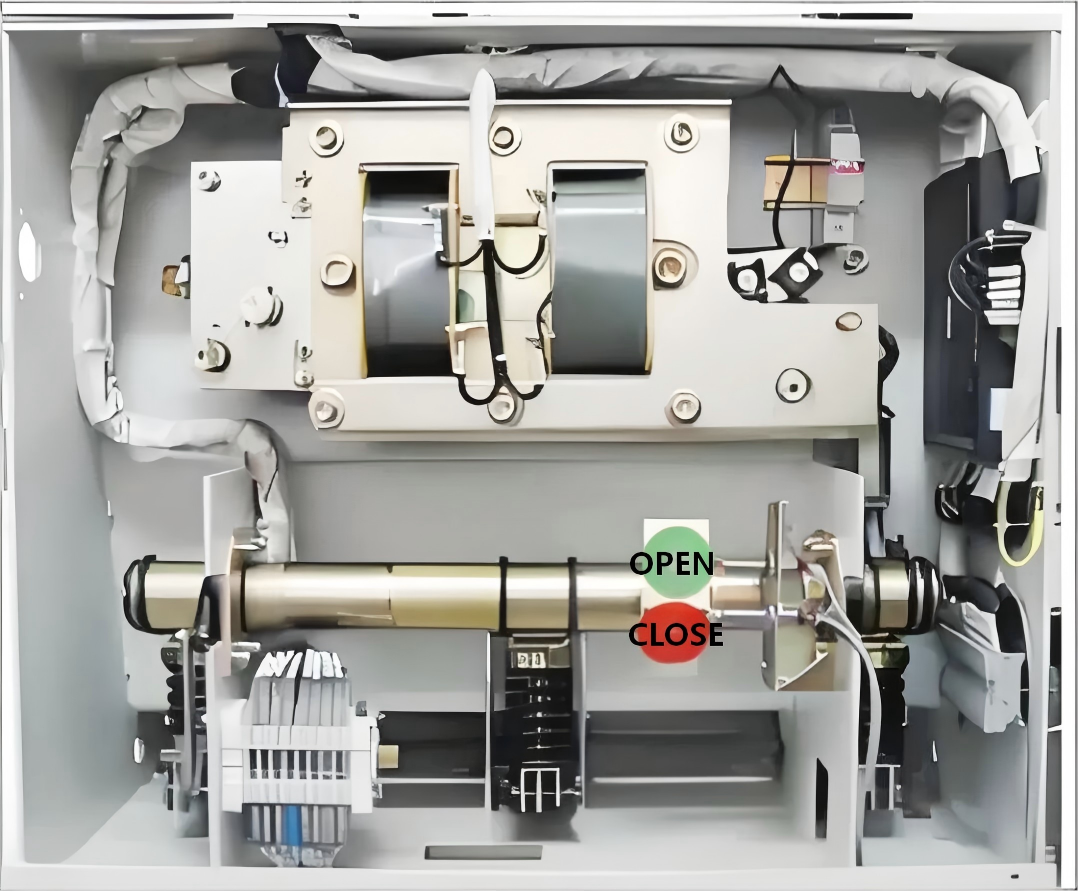
- Opening/Close Position and Status Indication: Based on operational and maintenance needs, the operating mechanism should have clear mechanical indicators of the open and closed positions to indicate the status of the circuit breaker.
Medium Bahasa Indonesia: Voltage Csirkuit Bpenghancur HAIbekerja Mmekanisme