 Turkish
 English
 Spanish
 French
 Portuguese
 Russian
 Arabic
 German
 Italian
 Dutch
 Japanese
 Korean
 Thai
 Vietnamese
 Indonesian
 Hebrew
 Panjabi
 Malay
 Bengali
 Persian
 Urdu
 Hazaragi
Current transformers are widely used in power systems; their function is to induce a small current—proportional to the current flowing through a high-current cable—for use in metering and relay protection.
What is the function of a current transformer?
To ensure the safe and economical operation of a power system, it is essential to monitor and measure the operating status of power equipment. However, standard measuring and protection devices cannot be directly connected to high-voltage primary equipment; instead, the high current from the primary system must be proportionally transformed into a lower current suitable for use by these instruments and devices.
When measuring high alternating currents, conversion to a standardized current level is required for compatibility with secondary instruments (in my country, the rated secondary current for current transformers is specified as 5A or 1A). Furthermore, direct measurement of line currents is extremely dangerous due to the high voltages involved. Current transformers serve the dual purpose of current transformation and electrical isolation. They act as sensors that provide secondary equipment—such as measuring instruments and relay protection systems—with current data from the primary electrical circuit. By proportionally converting high primary currents into low secondary currents, they bridge the primary system with the secondary equipment.
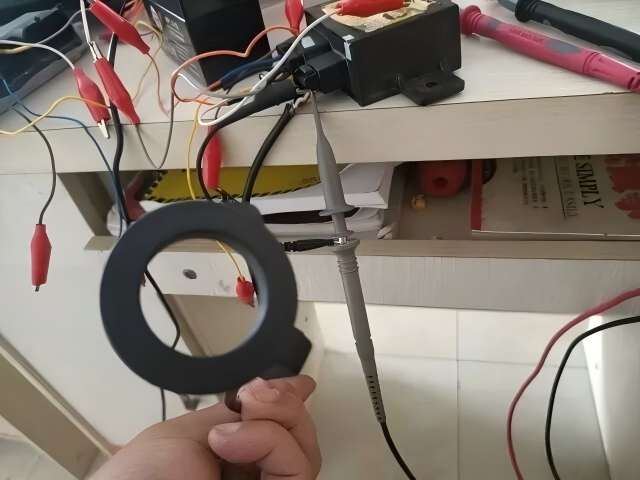
Consequently, current transformers are categorized into two types: those for measurement and those for protection. Measuring current transformers are used for metering (billing) and monitoring the current of operating equipment.
They are all CT, but what is the difference between having just one installed versus five or six?
When we open a power distribution cabinet, we can see numerous current transformers inside; some cabinets contain only one, while others may house as many as five or six. In reality, they all function by sensing current signals from the busbar, but the purposes of the measured currents differ. So, what roles do they play within the cabinet?
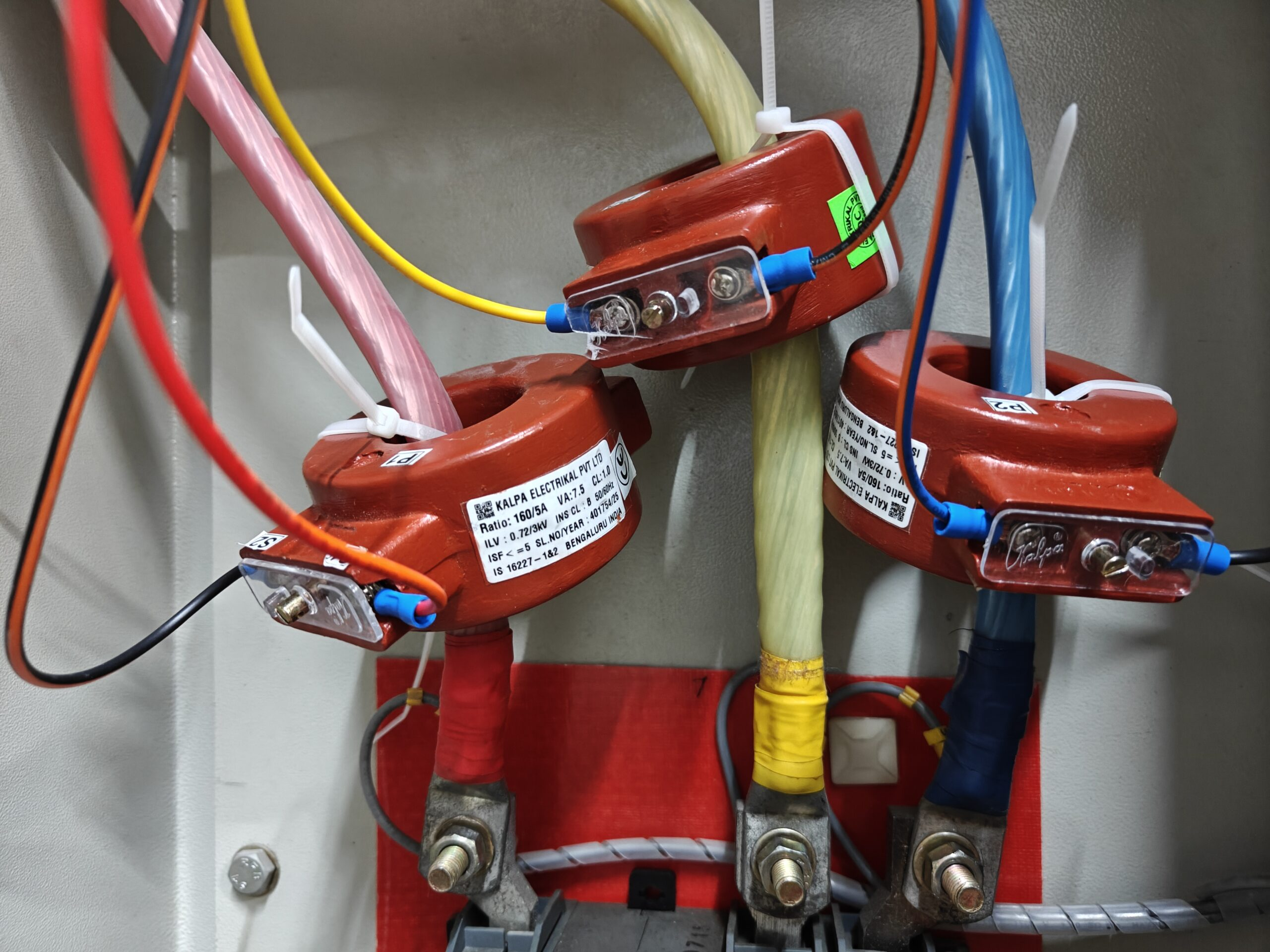
- Single Current Transformer: A setup involving only one current transformer is typically used to obtain current signals from a single line. Applications include extending the measurement range of a single-phase electricity meter, measuring current in a single-phase line, measuring current in a balanced three-phase line, and providing current sampling for a reactive power controller.
1). Extending the measurement range of a single-phase electricity meter: This primarily refers to the wiring configuration connecting a single current transformer to a single-phase meter.
2). Measuring single-phase line current: This involves connecting a single current transformer to an ammeter to measure the current in a single-phase line.
3). Measuring balanced three-phase line current: The principle is the same as measuring single-phase line current, as the currents in each phase of a balanced three-phase system are nearly equal.
4). Connecting a reactive power controller to a current transformer: The purpose is to obtain signals regarding current magnitude and phase from the busbar via the current transformer.
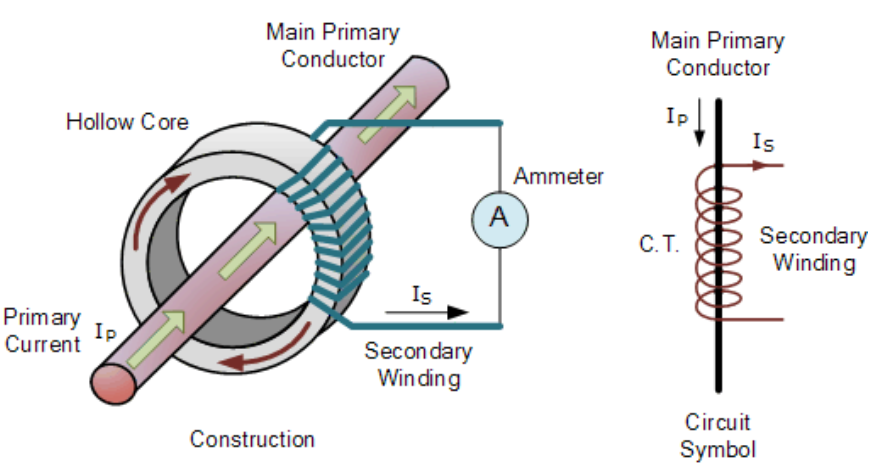
- Two current transformers: If both current transformers are installed on the same phase busbar, their function is effectively the same as that of a single current transformer. If the two current transformers are installed on separate phase busbars, their primary purpose is to measure the three-phase currents in either a balanced or unbalanced three-phase circuit.
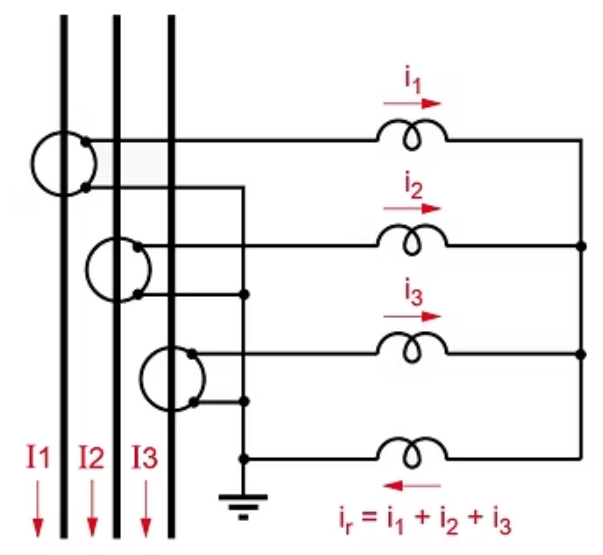
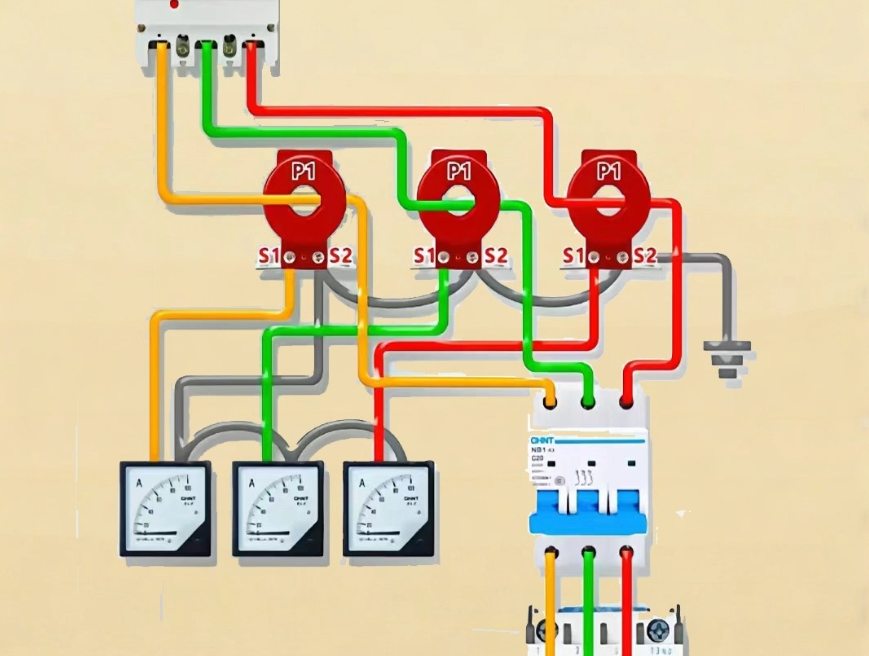
- Three current transformers: When three current transformers are used, they are primarily employed to measure balanced and unbalanced three-phase currents; they can also be connected to a three-phase meter to measure electricity consumption, or to a thermal relay to extend its operating range.