
 Dutch
 English
 Spanish
 French
 Portuguese
 Russian
 Arabic
 German
 Italian
 Japanese
 Korean
 Thai
 Vietnamese
 Indonesian
 Turkish
 Hebrew
 Panjabi
 Malay
 Bengali
 Persian
 Urdu
 Hazaragi
For SF6-insulated Ring Main Units (RMU) or GIS, the leakage rate requirement depends on whether the gas compartment is classified as a closed pressure system or a sealed pressure system under IEC standards.
1. IEC 62271-1 (General HV Switchgear Standard)
IEC 62271-1 defines:
| Gas system type | Maximum SF6 leakage rate |
| Closed pressure system | ≤ 0.5% per year |
| Sealed pressure system | Typically designed for ≤ 0.1% per year |
For a closed pressure system, the standard specifies a maximum relative leakage rate of 0.5%/year for SF6 and SF6 mixtures. The time between gas replenishments must be at least 10 years.
For a sealed pressure system, IEC does not directly state a fixed maximum percentage, but notes that to achieve a 20–40 year maintenance-free life, the leakage rate for SF6 is considered to be 0.1%/year.
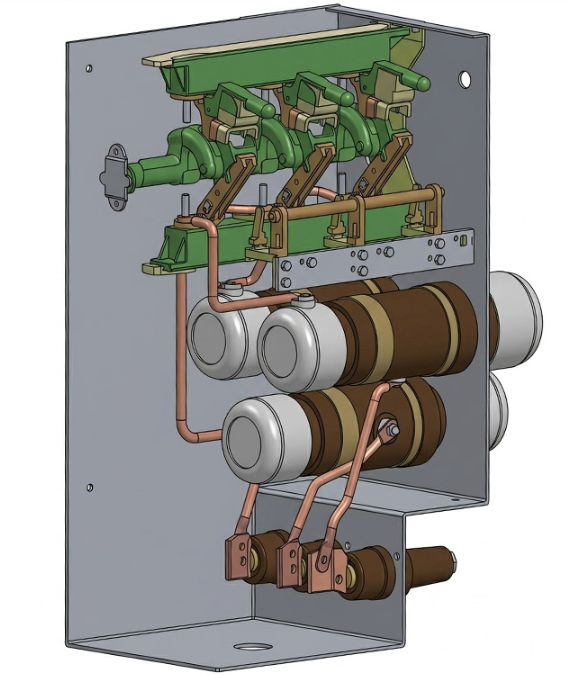
2.To reduce the gas leakage rate of ring main unit insulation, it is necessary to improve the “dynamic sealing” and “static sealing” performance of the gas filling box:
Dynamic sealing refers to a sealing structure where there is relative movement between the sealing parts. It is mainly used for operable components, and its core is to balance the mechanical movement requirements with the gas sealing performance:
– Application locations: Circuit breaker moving rod, grounding switch operating shaft, disconnector switch rotating shaft
– Sealing structure: Mostly uses a combined seal: “self-lubricating bearing + combined sealing ring | dustproof ring + main sealing ring + guide ring” structure. Some high-end products will add imported long-life grease.
– Qualification standards: In addition to meeting the annual leakage rate requirements, it must also pass the sealing performance test after more than 10,000 mechanical operations.
– Technical challenges: Ensuring both flexible operation of moving parts and maintaining sealing performance under long-term friction places extremely high demands on the sealing ring material and processing precision.
Static sealing refers to a sealing structure where there is no relative movement between the sealing parts. It is the core guarantee for zero leakage of SF6 gas inside an inflatable ring main unit. Common application scenarios and requirements are as follows:
– Application locations: Inlet and outlet bushings, explosion-proof membranes, pressure gauge valve seats, top and side expansion connections, etc.
– Sealing structure: Mainly O-ring rubber seals and applied sealant; some high-pressure parts may use metal gaskets as an auxiliary measure.
– Failure risks: Mainly due to aging of the sealing rings and sealant, scratches during installation, and insufficient machining precision of the contact surfaces.
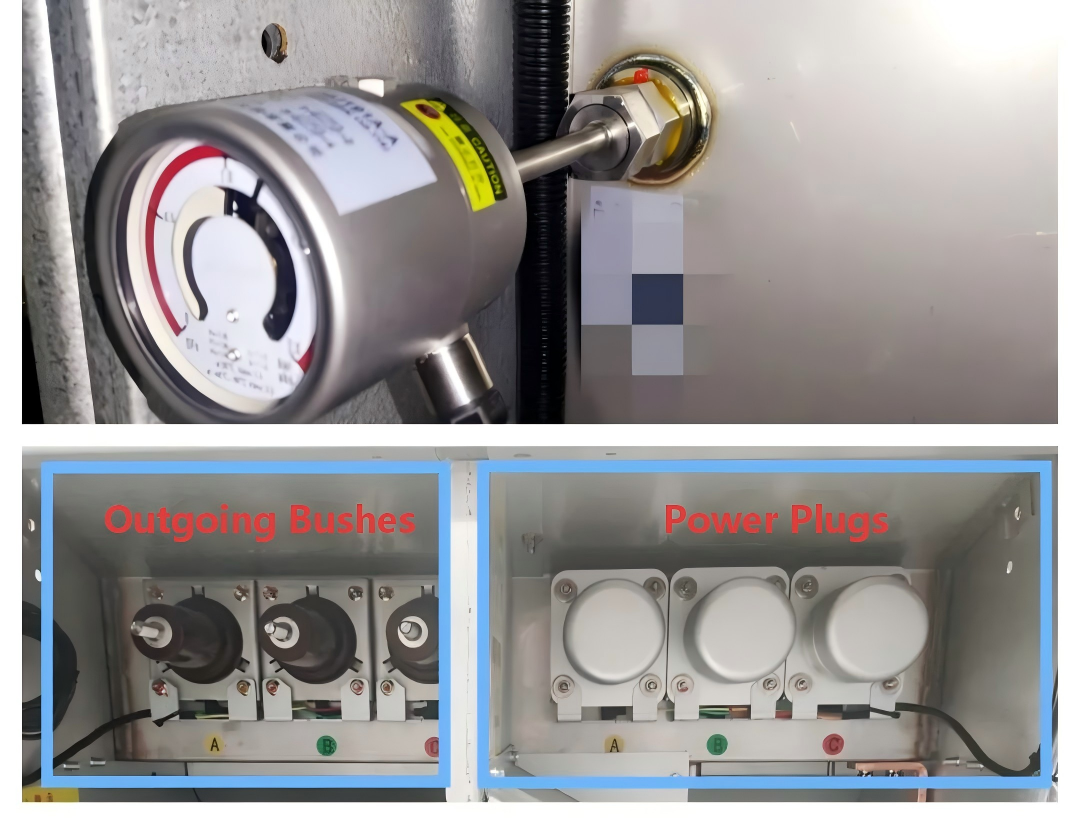
3.Commonly used methods for detecting leakage rate of ring main unit (RMU):
Before filling the gas box with insulating gas, a vacuum helium leak detection method should be used. The RMU gas box is evacuated, and then filled with helium at a certain pressure. Utilizing the principle that helium molecules have small volumes, if no helium molecule leakage is detected, the leakage rate of other gas molecules is likely even lower.
After filling the gas box with insulating gas, qualitative and quantitative detection methods should be used:
Qualitative detection: Use an SF6 leak detector to scan all sealing surfaces of the cabinet (flanges, valves, joints, etc.). The leak detector sensitivity should reach 1×10⁻⁷ mbar·l/s. If a leak point is detected, it should be marked.
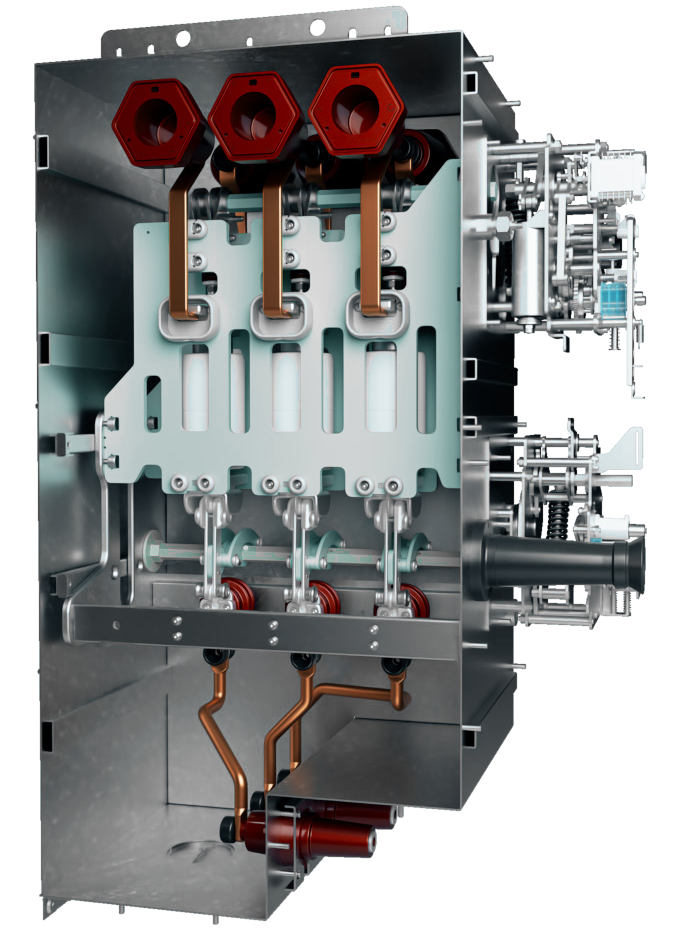
Quantitative detection: 1. Pressure drop method: Inflate the cabinet to the rated pressure, close the inflation valve, record the initial pressure and temperature, and record the pressure and temperature again after standing for 72 hours. Calculate the leakage rate using the formula; 2. Collection method: Cover the surface of the sealed cabinet with a collection hood, extract the gas inside the hood, analyze the SF6 concentration using a chromatograph, and calculate the leakage amount per unit time.
4.The core function of a ring main unit (RMU) is to switch on and off high-voltage circuits within a sealed cavity. Whether fully insulated or semi-insulated, the sealing performance is fundamental and crucial:
Once the insulating gas inside the cabinet leaks, the reduced gas pressure directly leads to a decrease in insulation strength. This can cause low-pressure alarms and operational lockouts, or even cabinet discharge and short-circuit faults. Furthermore, if non-environmentally friendly gases are used, leaked gas poses both environmental and health risks. Therefore, improving the sealing performance of RMUs to ensure that the “ring main unit leakage rate” meets requirements is an essential capability for every RMU manufacturer.