 Korean
  English
  Spanish
  French
  Portuguese
  Russian
  Arabic
  German
  Italian
  Dutch
Dutch  Japanese
  Thai
Thai  Vietnamese
  Indonesian
  Turkish
  Hebrew
  Panjabi
  Malay
Malay  Bengali
  Persian
  Urdu
Urdu  Hazaragi
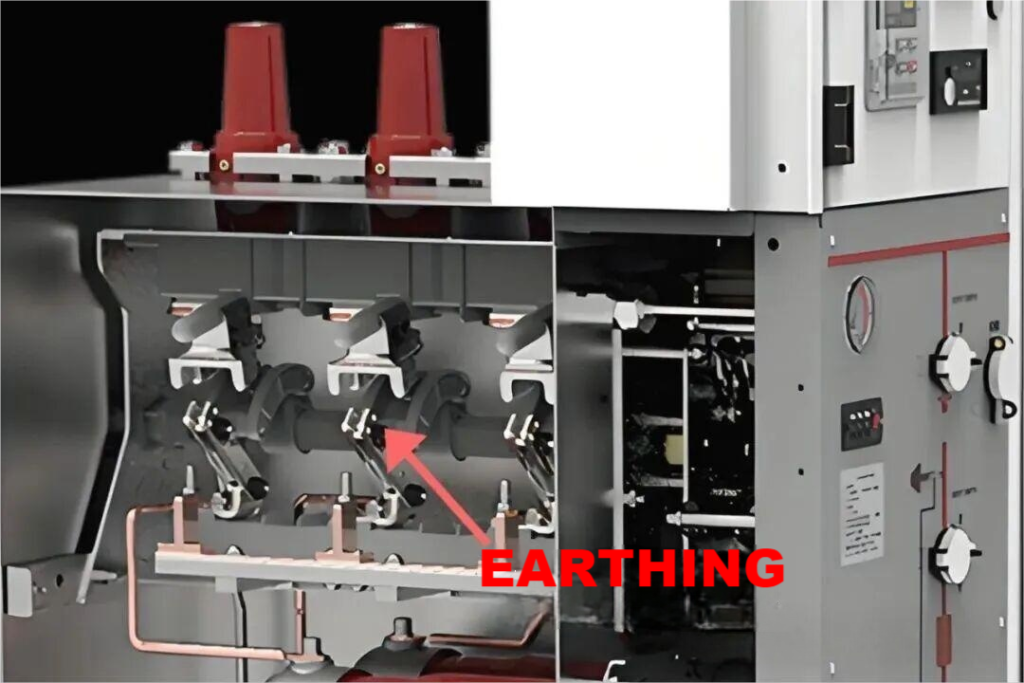
 - Functional Role of the Earthing Switch
In medium-voltage ring main units (RMUs), the earthing switch (ES) is often regarded as a device intended solely for maintenance grounding.
However, under several credible operating and fault conditions, the earthing switch may be required to make onto a live circuit and withstand the resulting short-circuit current.
For this reason, IEC standards explicitly require earthing switches to be designed and tested for short-circuit making capability, rather than treating this as an optional feature.
- Typical Operating Scenarios Requiring Short-Circuit Making Capability
2.1 Inadvertent Closing onto an Energized Circuit
In the event of mis-operation or interlocking failure, an earthing switch may be closed onto an energized feeder, resulting in a metallic earth fault with a short-circuit current close to the system maximum.
Under such conditions, the earthing switch shall:
Successfully perform the making operation under short-circuit current
Maintain mechanical integrity and electrical continuity
Withstand the thermal and electrodynamic stresses until the upstream circuit breaker clears the fault
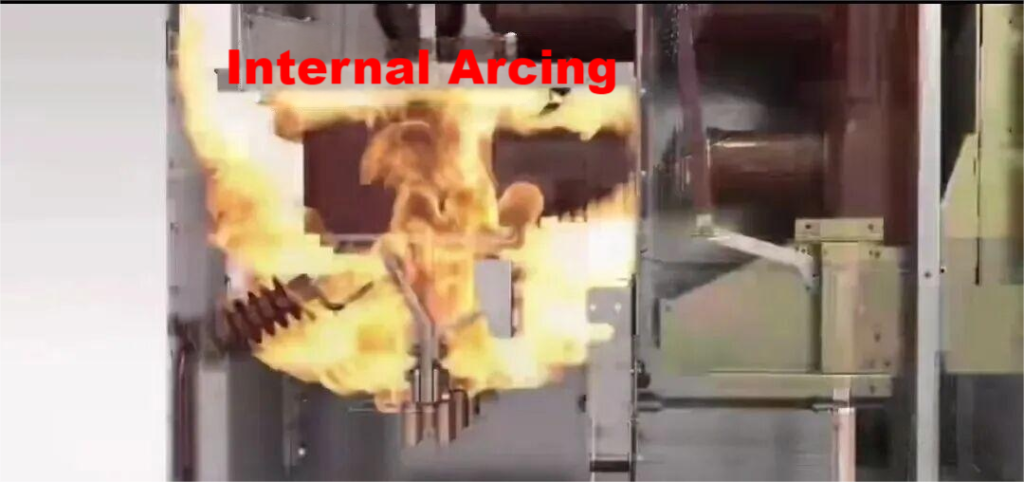
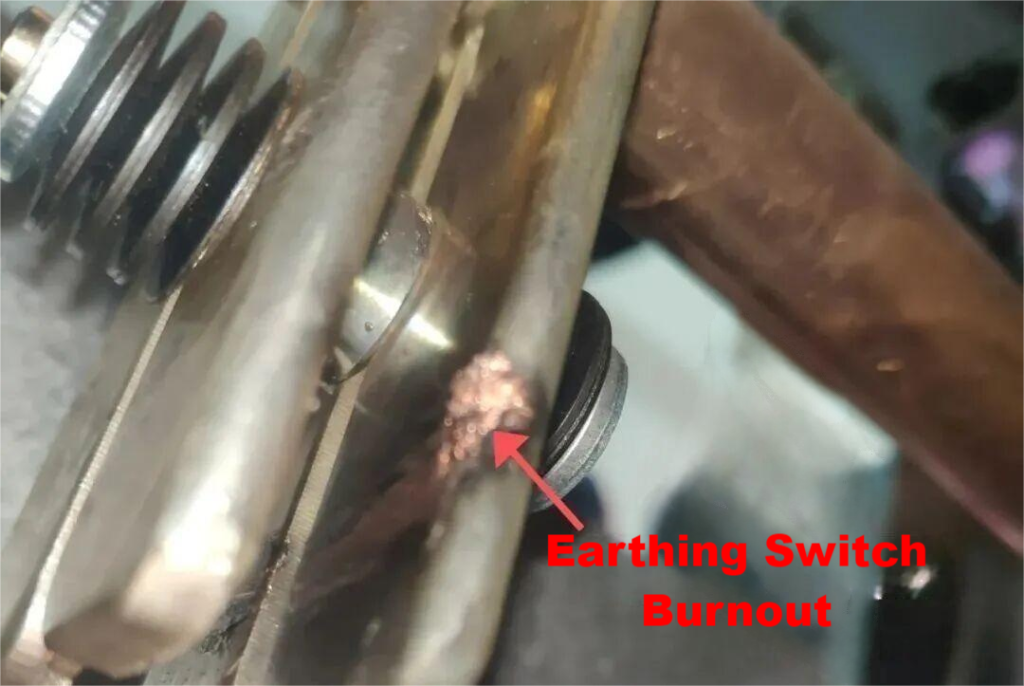
Failure of the earthing switch during this operation may lead to internal arcing, enclosure damage, fire, or explosion, significantly increasing the severity of the incident.
2.2 Coordination with Automatic Reclosing (Fast Earthing Applications)
In certain medium-voltage systems, particularly those employing single-phase auto-reclosing, a fast earthing switch (FES) is used to improve reclosing success by extinguishing the so-called secondary arc.
A typical sequence is as follows:
Occurrence of a transient single-phase earth fault
Tripping of the circuit breaker
Rapid closing of the fast earthing switch to eliminate secondary arc energy
Opening of the earthing switch
Reclosing attempt of the circuit breaker
In this application, the earthing switch functions as an active component of the reclosing scheme.
If the earthing switch is damaged by arc energy or residual current during the making operation, it may fail to open, thereby preventing reclosing and prolonging outage duration.
Consequently, reliable short-circuit making capability is a prerequisite for earthing switches used in fast earthing and reclosing applications.
2.3 Mitigation of Internal Arc Faults
In gas-insulated or fully enclosed medium-voltage switchgear, insulation failure may result in an internal arc fault, characterized by:
Extremely rapid arc development
High pressure rise within the enclosure
Limited response time for conventional protection systems
In some designs, a fast earthing switch is intentionally closed to create a controlled three-phase short-circuit, forcing the upstream circuit breaker to trip almost instantaneously.
This method significantly reduces arc duration and fault energy, thereby enhancing equipment integrity and personnel safety.
In such cases, the earthing switch must be capable of making under short-circuit conditions without loss of function.
- IEC Requirements for Short-Circuit Making Capability
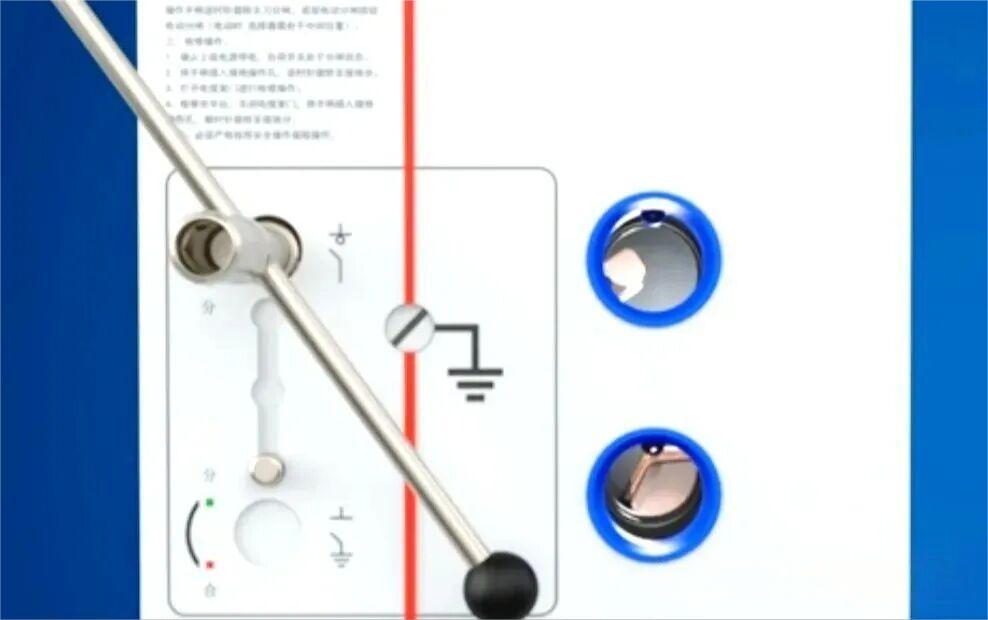
According to IEC 62271-102 – High-voltage alternating current disconnectors and earthing switches, earthing switches are required to have a defined short-circuit making capacity, verified by type testing.
The standard classifies earthing switches based on the number of short-circuit making operations they can withstand at rated short-circuit current:
Class E1
Capable of performing two (2) short-circuit making operations
Intended for general-purpose applications in medium-voltage distribution systems
Class E2
Capable of performing five (5) short-circuit making operations
Intended for applications requiring higher operational reliability, such as fast earthing or special protection schemes
It is important to note that:
IEC standards do not require earthing switches to interrupt short-circuit current
The function of the earthing switch is to make and withstand the short-circuit current until fault clearance by the upstream circuit breaker
This functional distinction clearly differentiates earthing switches from circuit breakers.
- Conclusion
From both an IEC standard perspective and practical system operation, short-circuit making capability is a fundamental safety requirement for earthing switches, rather than an auxiliary feature.
Earthing switches classified as E1 or E2 in accordance with IEC 62271-102 provide essential protection against mis-operation, support reliable auto-reclosing schemes, and enable effective mitigation of internal arc faults in medium-voltage RMUs.